
A Reading of Olga Tokarczuk’s “Primeval and Other Times”
In March, I read a novel that arranged its theology like a board game. Olga Tokarczuk’s Primeval and Other Times, translated into French as Dieu, le temps, les hommes et les anges, is a book that completely turned me upside down and I fell deeply in love with it. I already made a video review about it if you want to watch it. And I wrote this article before the author came out to the world, gushing about using AI in her creative process, something that left me baffled and a little crushed.
So here is the necessary disclaimer: It took me months to write this article, and I’m not giving up on it, or giving up on my love for a book she published in 1998, way before Artificial Intelligence became an issue. I know she’s a talented writer. I don’t know when she started thinking that wasn’t enough. I hope the reactions in the literature world will give her a much-needed feedback.
- I must mention the excellent French article on Substack, written by Alkaia, who gave me hope about IA and creativity.
Second disclaimer: this article is a theological essay, and the topic analyses said theology in a work of fiction. If this is a trigger, please do not read the rest of the article.
That being said, let’s talk about Primeval and Other Times. In one of the many subplots, the story gives one of its characters, the châtelain Popielski, a curious object: a leather-bound game called Ignis Fatuus, the will-o’-the-wisp, subtitled Instructive Game for a Single Player. The board is a labyrinth of eight concentric circles called worlds. The center is the most chaotic. The periphery is the easiest to walk. Each world has its own creation story, its own theological scene, its own moral. The player rolls dice and moves through the circles, and Popielski reads the rulebook in Latin and Polish and concludes that he is as quoted from the book “in the presence of a work of madness.”
Well, this madness haunted me months after I finished the book. This madness is my favorite part of said book. This madness, shook my theological teachings and forced me to write this piece, trying to make sense of something that made too much sense in the book, in a crazy sort of way.
The Game is a fictional dispositif inside the novel. It is also the novel’s deepest theological argument, hidden in plain sight. Through it, Tokarczuk poses many questions but only one matter to me: what kind of being created the world we live in? And her answer, accumulated world by world, is the most unsettling theology I have read in years. But not insane. The God of Primeval is not omniscient. He is not omnipotent. He is not loving in the way the houses of worship taught us to expect. He is, instead, a being who learns, who fails, who panics, who grows old. A being whose creation is the trace of his own becoming. A being who, by the end, looks back at his work and pronounces the verdict that the book of Ecclesiastes already gave us: vanity.
The Game left me looking at the dark, long after I finished the book. I was raised in a religious house that did not impose too much on me, nothing that would actually turn me away from the faith. This was made by design, to keep me in the fold. Never forced, gently coaxed.
Of course, adulting, life and its tribulations changed my point of view about religion but never in a hateful point. I view it, as I view many things: in a clinical and philosophical way. As I closed the book and held it in my lap, the title of this article came to me and refused to leave. Are we, the readers, his creation, humanity, the inhabitants of his eight worlds, the scars on God’s face?
A Labyrinth That Worsens Toward Its Center
The first thing to notice about Tokarczuk’s Game is that the geometry is inverted. In most cosmogonies, the center is the origin, the sacred, the place where order is most concentrated. In the Ignis Fatuus, the center is called the First World and it is the most labyrinthine, the most confused, the darkest. Without being messy, it is intrinsically complex. The closer the player gets to the origin, the harder it is to find the way. By contrast, the outer rings are aerated; the center is suffocating.
This is not a metaphor I have encountered before. Did you? If so, please give me the references in the comments. Creation, in this Game, gets worse as you approach its source. So the source is the problem. The source is where the trouble began.
The rulebook gives a phrase that becomes the philosophical foundation of the entire novel: the choices are made automatically, but sometimes the player has the impression of making reasoned decisions. He then feels responsible for the destination and for what awaits at the end. This eventuality is likely to frighten him. Tokarczuk is naming, in one sentence, the entire problem of free will. The choices are made for us and we sometimes feel we have made them, that feeling itself is the source of our terror. The Game is rigged, but the illusion of agency is what makes living it bearable, and unbearable, simultaneously.
The God of the Ignis Fatuus is the designer of this rigged Game but he has not concealed the rigging out of malice. He has concealed it because he is, himself, a player who has never won.
A God Who Learns
The First World is where God awakens. The light strikes inert matter, and God opens his eyes for the first time. He looks around. He sees no one but himself. He concludes, by default, that he must be God. There is no revelation here. He made an inference because there was literally nothing to contradict him.
Starting from the very beginning, Tokarczuk hits my religious learnings with a sledgehammer. She has, in one paragraph, dismantled two thousand years of theology. The God of the philosophers I know is eternal, preexistent, the unmoved mover, the necessary being. He who is, because nothing is without Him. The God of Primeval is none of these things. He is the product of the encounter between light and matter. He is contingent. He was awakened. And the first thing he does, after awakening, is invent a name for himself based on having no rival. Again, the narcissism of this God is not malicious. It is the default condition of a consciousness that cannot yet find anything outside itself. Reading it like it was written, was almost…sweet.
Now that he is conscious, he believes he must know himself, and he believes that knowing himself means naming. So He speaks. The Word leaves his mouth and shatters into a thousand fragments, and the fragments become the seeds of worlds. This is the moment I became excited and knew I was reading something different, something that would push the limits of my imagination and bring it to a fantastic boil: Creation, for Tokarczuk, is an accident of language. Unlike most religious narratives, here, The worlds are not willed; they are the shrapnel of a self-naming.
What follows is the biography of a being learning, on the job, what it means to be a creator.
In the Second World, God is young. He has not yet acquired experience. The texture of this world is faded, imprecise and things fall apart faster. War lasts forever. Lovers love desperately and die suddenly. The most subversive line of the entire novel is hidden here: Dieu manquait d’expérience. God lacked experience. A God who lacks experience cannot be omniscient. Which means the problem of evil suddenly completely changes nature. Suffering is not a mystery to be resolved by faith, no, it is a design error that has not been corrected. Again, no malice here, just inexperience. No malice.
Yet.
The Second World contains the most violent inversion in the book: Abel kills Cain. Cain has spoken first, and he has spoken with the lucidity that this Second, flawed World cannot afford. He has said that this world was not created in a state of grace. He recognized and even denounced a job poorly done. Cain has said that the rejection of his offering is arbitrary. Abel, the beloved, replies with a phrase that should make every reader pause: “My offering was accepted because I love God; yours was rejected because you hate him. Creatures like you should not exist.” And Abel kills Cain.
Tokarczuk is clever but not subtle here: the lucid is killed by the beloved. The believer becomes executioner. The phrase “creatures like you should not exist” is the rhetoric of every sacralized exclusion from the Inquisition to the camps. Tokarczuk has buried, in the Second World, the original mechanism of religious violence. The God of inexperience produces believers who kill in his name, not despite their love but because of it.
To me, this is the first scar.
In the Third World, God grows bored because the animals do not admire him. They do not understand nor care to understand, the magnificence he bestows on them. They do not love him, they simply live their existence without any other goal. God does not like that and in a fit, he imposes consciousness on them by force. They hate it. They were changed, altered, deformed to their very core, without their consent, and they cannot accept something so unnatural to them. So the animal, afraid and upset, drown God. “In the third world, there is no God, nor man.”
The lesson I took from this part is that the creator who could not bear his creature’s indifference is murdered by his creature for trying to convert it. This is not the punishment of disbelief. The way Tokarczuk writes it, it’s the legitimate self-defense of beings who never asked to be made aware. Another dissonance in my religious teachings: imposed consciousness, in Tokarczuk’s reading, is an act of aggression, not of grace.
In the Fourth World, God finally made something that pleases him greatly: a human. It’s even deeper than that: he falls in love with the human he has made, nothing so perfect, so close to what he is, has ever been produced by him before. He’s enamored.
And then, the human walks away.
The divine catastrophe now turns affective. Desperate to keep him close, God catastrophizes to manufacture dependence: “vois les tremblements de terre, les éruptions des volcans“: he points out the dangers of nature, of the world, the earthquakes, the volcanoes erupting. He warns the human of the fatality of his surrounding, hoping to entice fear and coaxes him back to his side. The human refuses: “laisse-moi en paix, je me débrouillerai“. Leave me be, I will find my way.
God is left alone, again, rejected, scorned even, and in his solitude he decides to rewrites the story to say that he was the one who expelled the human from paradise. He cannot bear the asymmetry of having been left.
Another destructive blow to the traditional theological narratives: Tokarczuk implies here that the original Genesis is not the story of human disobedience. It is the defensive memory of a God who could not survive being unloved.
This is the second scar.
A God Who Fears
By the Fifth World, God is no longer young, and the danger he poses is no longer the danger of inexperience. Finally. He matured into feelings that are not so naive or nice. In the Fifth World, the danger God poses is of a being who has begun to fear his own creation.
He looks at Job. If you are not familiar with diverse stories of Job, in different religions, the summary is that he is a man whose perseverance and unshakeable faith were rewarded by God, after said God tested him by inflicting every disasters he could think of on him and therefore taking away all that Job held dear. In all the scriptures, Job’s faith and love for God never waivered.
In Primeval, God wonders what would happen if Job were stripped of everything. Again, there is no malice yet, this is more of an experiment for him. He does not strip Job out of cruelty; he does so out of curiosity. Tokarczuk specifies that he weeps as he removes Job’s possessions, his loved ones, his health. So, since he wept, we can assume that God is not without sympathy, he feels, still, deeply for the multiplications of the first human he created.
But then, something unexpected happened.
When Job stands stripped of everything, he starts to shine with a light identical to God’s own, perhaps brighter, because God has to squint when he looks at him.
And so… God panics.
He gives Job back his goods, and on top of them he invents money, banks, vaults, desires, fears, restless wanting, until Job’s light dims, dims, dims and disappears.
This is the most theologically scandalous passage in the novel and one of my favorites. In Tokarczuk’s reading, God fears human holiness. And the most effective way to kill it is the society of consumption, used here as an instrument of divine repression. However, what does this says in a theological point of view? This passage of the Game directly contradict many philosophers critiques of human behavior: our biggest flaws, our biggest sins, the infinite shopping list, the anxieties of accumulation, the addiction to having more, are not human inventions; they are God’s response to the unbearable possibility that a stripped human might shine as he does or even brighter.
This is the third scar.
The Sixth World is not unlike the Second one. We encounter another act of inattention, but this time, it is not due to inexperience. There is however, a lack of care. God creates the Sixth World by accident and leaves.
Yes, you read that right, he just leaves without a second glance. He abandoned that world without a second thought too. Doesn’t that remind us of the way his human treated him?
Instead of shrivelling into itself or collapsing like a deflated balloon, The Sixth World continues to create itself in God’s absence. Matter generates objects, rivers find their own valleys and of course, men name themselves gods. There is an overproduction of everything. Time gallops like a panicked horse. Men collapse, exhausted by their accomplishments. This is a metaphorical pandemonium.
When God returns, he’s crossed. And perhaps a little disgusted. He destroys it all with a single thought. The Sixth World becomes “empty and silent as a concrete vault.”
This part of the Game is short and cold. It reminded me of the parent who creates by mistake, abandons, and demolishes in irritation. And once again, we find ourselves with another theological reading that distorts the traditional ones: Tokarczuk suggests here that the chaos of modernity is not the failure of human management. It’s the consequence of intermittent divine attention.
And this is the Fourth Scar.
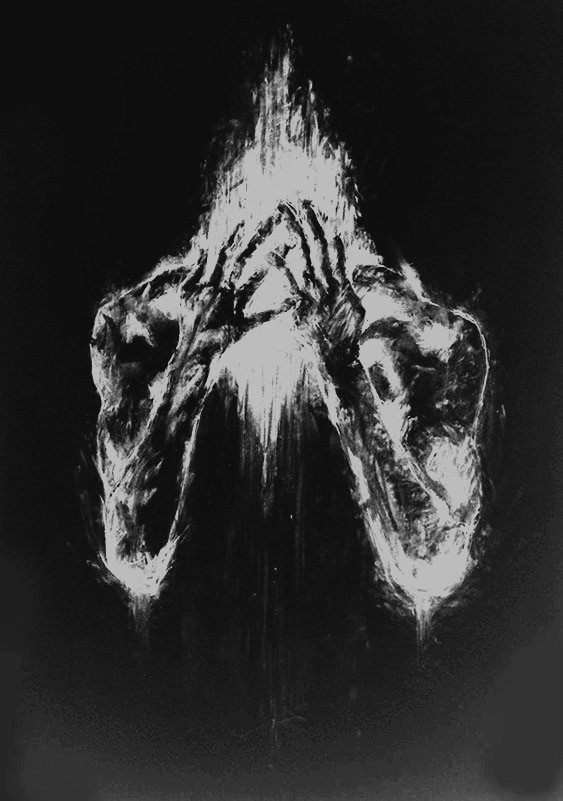
We arrive at my favorite part of the Game, my favorite world: In the Seventh World, with a rewrite of The Tower of Babel myth. If you are not familiar with the etiology of Babel, I will summarize it briefly: men managed to build a tower so tall and so great that it could reach the sky. This feat was due to the fact that they were a united human race speaking a single language. They were in an harmonious concordance because they understood each other perfectly. God’s motive for messing with that, is widely debated in theology and depending on the religion, his reasoning is different, just like the reason behind the construction of the tower. Babel is either a tale of human hubris or a tale of human blasphemy, but in the end, one thing remains: it’s the men’s fault.
Tokarczuk rendering completely turn the mirror around.
In the Seventh World, men build the tower of Babel and succeed. From the top, they see God’s feet and the body of the serpent that devours time. They reach the edge of the worlds. God’s response is not righteous anger like it is in the story of Nimrod. It is exhausted pragmatism. “Tant qu’ils resteront un seul peuple et parleront une seule langue, ils pourront en faire qu’à leur guise.” As long as they stay one people and speak one language they will do as they please.
So, he confuses the languages to keep them busy fighting one another. “Et moi ils me laisseront en paix.” And they will leave me in peace. He is so tired of their success that he fragments the species to obtain rest. He is all too aware of what he once loved dearly but is now draining him.
The condemnation of those who have seen too far is the most haunting line of the seventh world: “celui qui a vu l’enceinte du monde souffre plus que quiconque de sa condition de prisonnier“. Those who have seen the edge of the world suffer more than anyone else of his prisoner’s status. To see the wall of the prison is worse than to forget it exists.
God watches that wall everyday, he created it and will never have the luxury of forgetting it. His only saving grace was the fact that this prison (and himself) were unreachable to men until the tower. Then, they managed to reach it. They saw the edge of the world, his feet and the great serpent. They saw things they will never forget.
But him? He has no peace, no refuge, and no escape. Worse, things happened to him now, not just because of him. He’s alone and weary.
And this is the Fifth Scar.
A God Who Decomposes
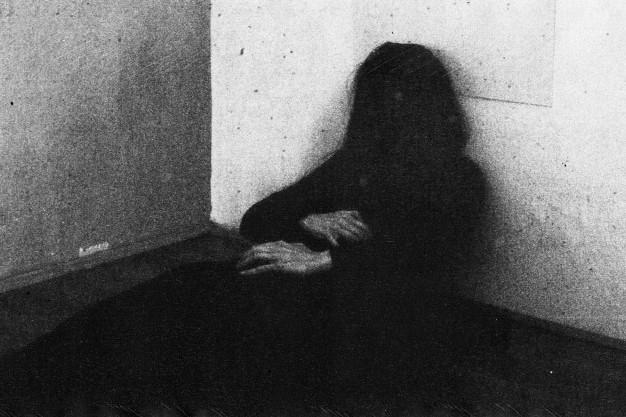
By the Eighth World, God is old. His thought is feeble; his Word stammers. The same Word that, at the First World, had created worlds by shattering, now crumbles. And we understand that the instrument of creation has become the instrument of decomposition.
God pronounces his own verdict: “La création des mondes ne mène à rien, ne prouve rien, ne change rien. Ce n’est que vanité.” The creation of World does not have any meaning, proves nothing and changes nothing. It is only ego. The Ecclesiastes echo feels deliberate here, but where Qohelet reaches a resigned and almost serene wisdom, the God of Primeval reaches an exhausted nihilism. He would like to die as he has watched humans die, but death does not exist for him. He’s stuck and depressed. He is condemned to persist in his decomposition.
And then comes the most generous (and devastating) revelation of the novel: God can perceives that outside him exists an immutable order, an order that contains even him, an order in which what seems dispersed in time, coexists for eternity outside of time. He is not the ground of being. He is, like us, contained in being.
He is in the order, not above it.
And to me this is the Sixth Scar.
I am not sure I can overstate how unusual this is, as a final theological move. At least, I never encountered it in my readings. Tokarczuk does not absolve God. She does not redeem him. She does not, in the end, give him any of the things Western philosophical theology had promised would always belong to him. What she gives him is kinship. He shares our condition: fallible, ignorant of himself, traversed by time and finally, contained.
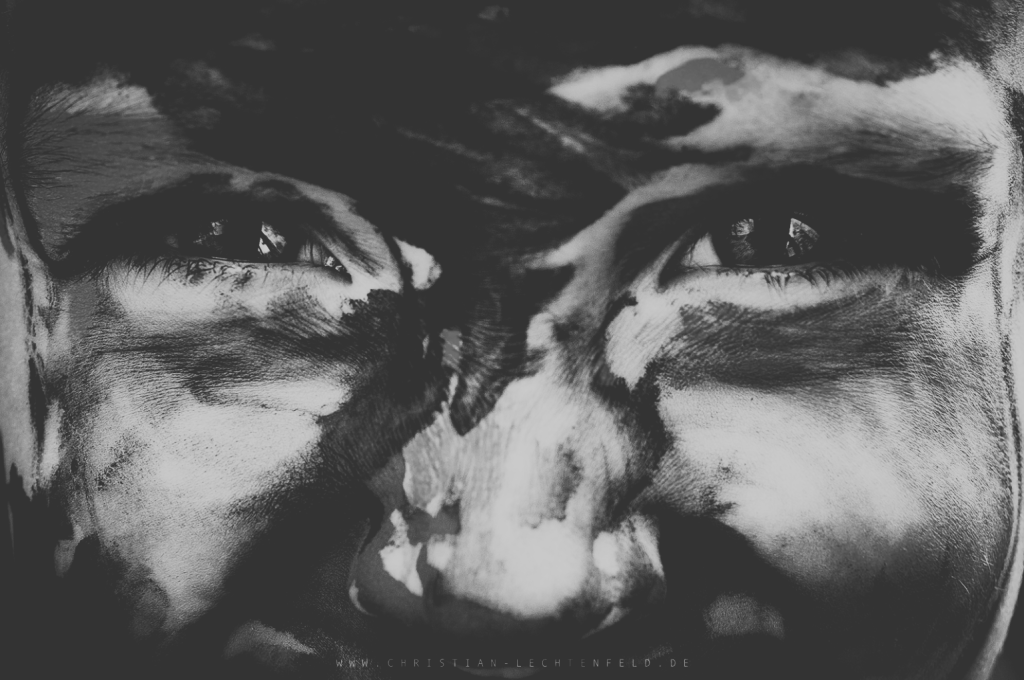
There is a passage on page 236 that I keep coming back to. It’s not part of The Game, but it’s important nonetheless: Geneviève, one of the women of Antan, watches the Jews of her village being marched away by the German army. The procession is so long that night falls before it ends. She closes her eyes and the procession continues inside her eyelids. “Elle sut que Dieu les regardait aussi. Elle vit son visage, noir, effrayant, plein de cicatrices.” She knew that God was watching them too. She saw his face: black, terrifying, covered in scars.
This is the moment that shook me to my core. This is the moment my title comes from.
The Game That Does Not End
I have been turning this image over in my head for months. I have been torturing myself about whether or not I should post this article. Writing it was an unshakable need, but posting it? That’s something completely different considering the subject.
Are we the scars on God’s face, in the sense that our suffering is engraved on him? Or are the scars his own, the marks of his own becoming, of which we are simply, also, witnesses?
… or are we, what fundamentally, destroys him, little by little?
The novel does not decide. It’s part of why I liked Primeval so much. It offers no comfort or false platitude.
If we accept that God lacked experience in the Second World, was indifferent in the Sixth, panicked in the Fifth, fragmented us in the Seventh, then yes, the wounds inflicted in his name and the wounds he inflicted directly are inscribed on him. He is the carrier of his own creation’s pain. The Jewish procession watched from Antan is in the face she sees. The death of Cain at the hand of Abel is in the face she sees. The drowned God of the Third World is in the face she sees. He bears them because they happened in worlds he made when he was not yet capable of making them better.
But if we accept the final revelation of the Eighth World, that God too is contained in an order he did not author, then his scars are not his alone. He is, with us, marked by the same time, the same impermanence and the same inability to escape the labyrinth whose center we both share.
Finally, (and this is my favorite theological hypothesis), if we accept, that God, in Primeval is a being that started as imperfect, as inexperience and as emotionally fragile as we, his creations, are, we must accept that our choices, our behaviors and misbehaviors, our cruelty, our flaws, our abandonment and our defiance, in his eyes, caused the pain that carved up his face with scars.
There is no clear answer, just what you feel at the end of the book.
The Game is for a single player. But the Game has been playing us all along.
Tokarczuk’s gesture, in the end, doesn’t exactly feel like is not absolution. It is what she calls elsewhere “czułość”, the Polish word she uses to describe the patient tenderness of looking at a being you understand but cannot save. She looks at God with the same attention she gives her humans. She does not absolve him. She understands him.
To understand does not erase the scars but it does makes them legible.
And I think that is the most… adult theology I have encountered in a novel. Whether you come to the conclusion that we are not the scars on God’s face but simply the readers of a face that bears them and that bears ours.
The book does, however, forces us to look without flinching at what our own faces will bear, and at what we have placed on the faces of others.
In Ignis Fatuus, the labyrinth has no exit and quite frankly, the Game is rigged. The center is the origin and the origin is the trouble. But the act of reading the rules, of seeing the wall of the prison, of recognizing the scars, is what Tokarczuk offers as the only thing we can still do, in the Eighth World, with a stammering Word and an aging God.
She and Primeval and Other Times, offers us reading itself.
I warmly recommend the book to anyone interested in it. And I would love to hear your thoughts and book or essays recommendations on similar subjects.
Thank you for reading and see you in the next JGC essay.
Love, Sabine.
—
**TL;DR**
– Tokarczuk’s Primeval and Other Times contains a fictional board game called Ignis Fatuus, an eight-world labyrinth that hides the novel’s deepest theology
– The God of these eight worlds is contingent, not eternal: he was awakened by light striking matter, and lacks experience in the Second World
– Each world stages a different stage of God’s psychological biography: narcissism, inexperience, rejection, abandoned love, jealousy, neglect, fear of human unity, and decomposition
– The novel’s final revelation is that God too is contained in an order he did not author; he shares our condition rather than transcending it
– Tokarczuk’s gesture is not absolution. It is “czułość“, a tender understanding. The scars are legible, not erased.
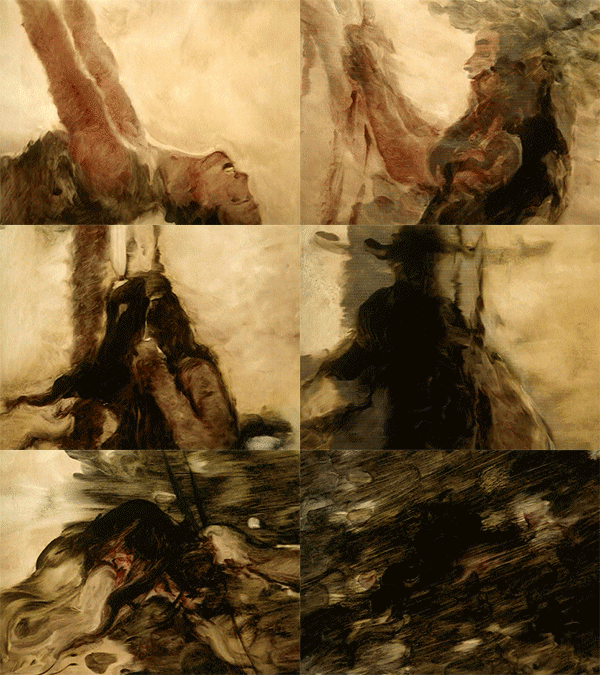
All images from this article, including the header, are sourced on Cosmos, in the collection “A foreign God” by ldiotdoomspiral
—
Did you like the article? Please leave a comment!
Explore more articles and essays in the “Cultural Thoughts: Essays & Open Letters ” on JGC Blog.
To get to know me, the author better, you can subscribe to my Social and Follow the “Sabine Yapping Series” :)
The French translation of this article is available on Substack.






Leave a Reply