
“One must be absolutely modern.” Arthur Rimbaud, Adieu, in Une saison en enfer (1873)
What is a poet, in 2026, in a time when poetry is no longer the first tongue of the age, and is perhaps becoming that again, through other channels, on other screens? I first wrote on this question nearly eleven years ago, at twenty-six, still a little enchanted by the solemnity of the subject. I want to return to it now, more calmly, with a definition that the young woman I was at the time had sensed without quite being able to articulate it: a poet is a fire-thief.
The formula is not mine. It belongs, in part, to Rimbaud himself, who laid claim to the Promethean gesture in his now-famous Lettre du voyant to Paul Demeny in 1871. « Le poète est vraiment voleur de feu » the poet is truly a thief of fire, he wrote, deliberately placing himself among those who, in order to give to humans what humans lack, must go and take it from the gods. It is under that angle, that of the theft that serves, that I would like to reread Rimbaud here, in three movements: the reinvention of feeling, the vocation of the seer, and the revolt that underlies them both.
I. Reinventing Feeling
A poet feeds on what they see, what they hear, on ordinary humans, on daylight, on the obscurity of the night. There is nothing original in that. Every artist, every writer does the same. What sets the poet apart is that they do not return the feeling as they received it. They pass it through an inner fire, they burn it, they recast it, and they hand it back unrecognizable to whoever had felt it first.
« L’amour doit être réinventé, on le sait » love must be reinvented, this we know, writes Rimbaud in the Illuminations. The phrase has become almost banal from repetition. But let us reread it with the ear of 2026: it does not say that love is imperfect and should be perfected. It says that love, as we inherited it, is already dead, already exhausted by the generations that handed it down to us, and that it must be rewritten anew in every generation, or else we will feel nothing at all. The poet does not invent the feeling; the poet invents the manner of feeling. This is what Rimbaud demands when he rejects the « subjective » poetry of Lamartine and Musset, which he finds insipid and already-seen. What he wants is « la fantaisie » the fantastic. What he wants is to explore every facet of the human condition, even to the point of being soiled by it, because no feeling can be reinvented without first being touched at its bottom.
Of course, this call to dérèglement is frightening. However, it is precisely that fear which the poet must walk through. Read « Ophélie », and a death by drowning becomes a strange betrothal; read « Les déserts de l’amour », and love becomes a geography one traverses, not a state one possesses; read « Le mal » or « Au Cabaret Vert », and hatred and joy pass together through the same crucible. The poet refuses to take reality as their only law. Their law is the quest for the absolute, which is to say, the quest for a feeling that no human being has yet felt before them.
This quest has a name in Rimbaud’s vocabulary, given in his Lettre à Georges Izambard of 13 May 1871: « Le poète se fait voyant par un long, immense et raisonné dérèglement de tous les sens » the poet makes themselves a seer through a long, immense, and reasoned derangement of all the senses. Three adjectives, and each of them counts. Long, because the derangement is not a brief crisis. Immense, because it overflows individual experience. Reasoned, above all, because this is not a passive delirium: it is a method. Rimbaud’s madness is not an illness he undergoes. It is work.
II. Messenger of the Gods
A seer, with a capital S
If the poet is more than human, it is because they stand, like the inspiration they seek, between two worlds. On one side, the faerie, the marvelous, the place where imagination can dare itself. On the other, what Rimbaud calls, in Adieu, « la réalité rugueuse à étreindre » the rough reality to embrace. The poet is the one who can move from the first world to the second without disowning either.
Rimbaud declared himself a seer A seer of another era, of another style, madder, deeper, and therefore, in his own words, « plus parfait » [more perfect]. He despised the codified poetry of the Parnassians, which he judged pedantic and dead. He eventually abandoned verse itself, dissolving his quest into the prose poetry of the Illuminations and Une saison en enfer, leaving behind him a literary world stunned by what Verlaine, in presenting the manuscript of the Illuminations, would call « la plus haute ambition de style » the highest ambition of style.
A divine message, but without religion
Some poets have their preferred themes. Paul Éluard, love; W. H. Auden, loss («Funeral Blues» alone would prove it). Rimbaud, however, seemed to want to know everything at once. In all his collections, the themes are wide and varied, and you never know in advance in which register he is going to take you. Verlaine, writing on the Illuminations put it well: « Des thèmes il n’y en a, ou plutôt nous n’en trouvons pas. De la joie d’être un grand poète, évidemment, et d’esquisses, petites vagues d’amour écrites avec la plus haute ambition de style » there are no themes, or rather we cannot find any. The joy of being a great poet, obviously, and sketches, small waves of love written with the highest ambition of style.
Rimbaud, in his writings, seemed universal. Each poem is a message hurled at beauty, at love, at death, at hatred, at this humanity that will have degraded him without ever quite extinguishing him. His college headmaster, in a prophetic flash, said of him: « Rien de banal ne germe dans cette tête. Ce sera le génie du mal ou le génie du bien » nothing banal germinates in this head. It will be the genius of evil or the genius of good. To my mind, a poet must be able to be both at once. That, precisely, is the fire-thief: someone who refuses to let morality confiscate the sublime, and who refuses to let vice confiscate the revolt. Someone who takes the fire wherever it burns, and brings it back wherever it is missing, regardless of the color of the flame.
III. A Rebel
Against the self
The grandeur of the task forbids neutrality. Beset by doubt, by fear, by grief, a poet must be able to go look for their me in order to better write the others. Rimbaud states this in a sentence that has become almost proverbial, but whose radicality is rarely perceived: « Je est un autre » I is another. The phrase is laid down in two letters of 1871, and it says much more than what the textbooks make it say.
The subject of the poem is not the poet. The subject of the poem is what passes through the poet, and dislodges them from themselves.
It is in Une saison en enfer that the « Je » the I returns with the greatest violence. The collection is written in the middle of a period of doubt, crisis, intimate defeat. After suffering, after being soiled by the life he led, after the Verlaine episode and the Brussels gunshot, Rimbaud delivers himself. He performs his introspection as every poet must perform it: without sparing himself. « L’Époux infernal » and « Délires I et II » are proof that Rimbaud had his fears, his self-disgust, and that he looked them in the face without averting his eyes. A poet destroys themselves the better to rebuild.The sentence is easy to say, hard to live. Rimbaud lived it.
Against humanity
War, death, hatred, cruelty: all these themes are explored, beautified, defaced by a Rimbaud in revolt against injustice, screaming his indignation at the world. Poetry can also serve as combat. « L’Orgie parisienne ou Paris se repeuple » The Parisian Orgy, or Paris Repopulates Itself offers a striking example: at seventeen, Rimbaud writes against the Versaillais re-entering Paris after the Commune, and spits in their faces images of unprecedented violence. It is not only anger. It is an ethics of the witness: the poet refuses to close their eyes on what they see, and makes of the poem the place where what should be silenced ceases to be.
Conclusion: today
Nearly eleven years after first writing on this question, I can say what I sensed then without being able to formulate. A poet is not someone who writes poems.
A poet is someone who agrees to steal the fire, that is to say, to go and find the sublime, the derangement, the revolt wherever the age has confiscated them, and to return them to those who are missing them.
Rimbaud has left us three lessons. Reinvent feeling, because no inherited love, no inherited grief, no inherited joy will hold. See, because the rough reality to embrace is never the world’s final layer. Rebel, against the self first, against injustice next, because no writing is innocent. At each of these three movements, the poet pays. They pay with mental health, with social ties, with reputation, sometimes with life. Rimbaud was seventeen when he wrote the Lettre du voyant. He was twenty-one when he stopped writing forever. In his case, the bill came early.
What can we take from all this in 2026? That poetry is not a genre, but a way of inhabiting language. That the poet, whether they publish in a journal, on Substack, in voice notes on Instagram, or in a closed notebook, is the one who refuses to acquiesce. Stealing the fire, today, means refusing to let the algorithm dictate what may be said, what may be felt, what may be hoped.The quest for the absolute has not changed. Only the pyres have changed.
And that is just as well. The fire, itself, still waits to be stolen.
—
**TL;DR**
– A poet is, in Rimbaud’s own terms, a voleur de feu (fire-thief): someone who goes and takes from the gods what humans dare neither to give themselves nor to receive.
– Three lessons: reinvent feeling (inherited love, joy, grief are already dead), see (the poet is a seer with a capital S, who holds both the m velous and the rough reality at once), rebel (against the self, against injustice).
– « Je est un autre »does not mean that the poet is alienated. It means that the subject of the poem is not the poet: it is what passes through them.
– In 2026, stealing the fire means refusing to let the algorithm dictate what may be said, felt, hoped. The fire still waits to be stolen.
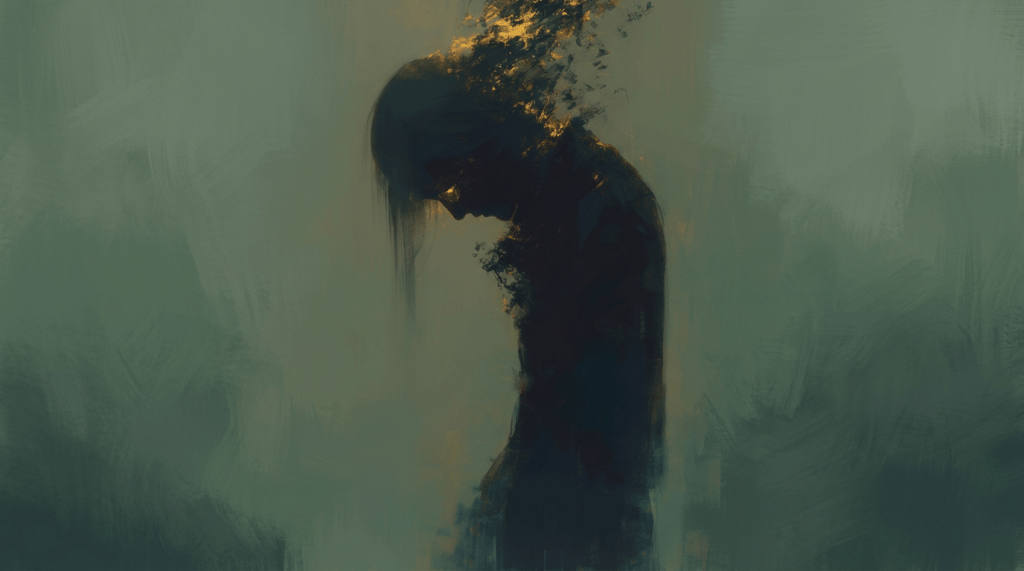
Header Image: Source: Anastasia via Pinterest
—
Did you like the article? Please leave a comment!
Explore more articles and essays in the “Cultural Thoughts: Essays & Open Letters ” on JGC Blog.
To get to know me, the author better, you can subscribe to my Social and Follow the “Sabine Yapping Series” :)
The French translation of this article is available on Substack.




Leave a comment