
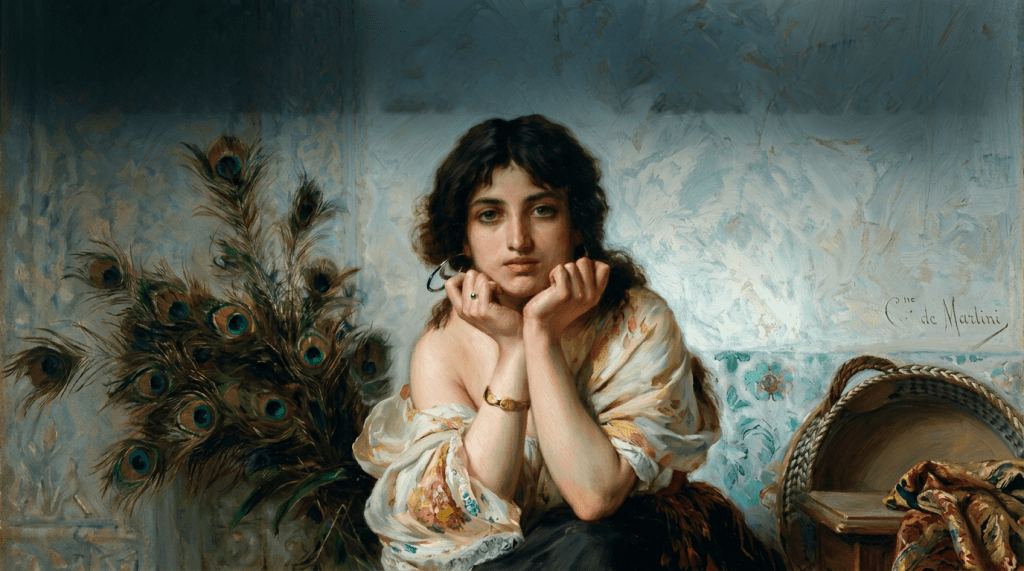
I want to lead with that, because the marketing of this movie by Damiano Michieletto, feels like it tells you otherwise. Vivaldi‘s name is on the poster for the French version. His music is in your ears. The famous Venetian orphanage where he actually taught for more than thirty years is the setting. You walk into the cinema expecting a film about him. You walk out having watched a film about her.
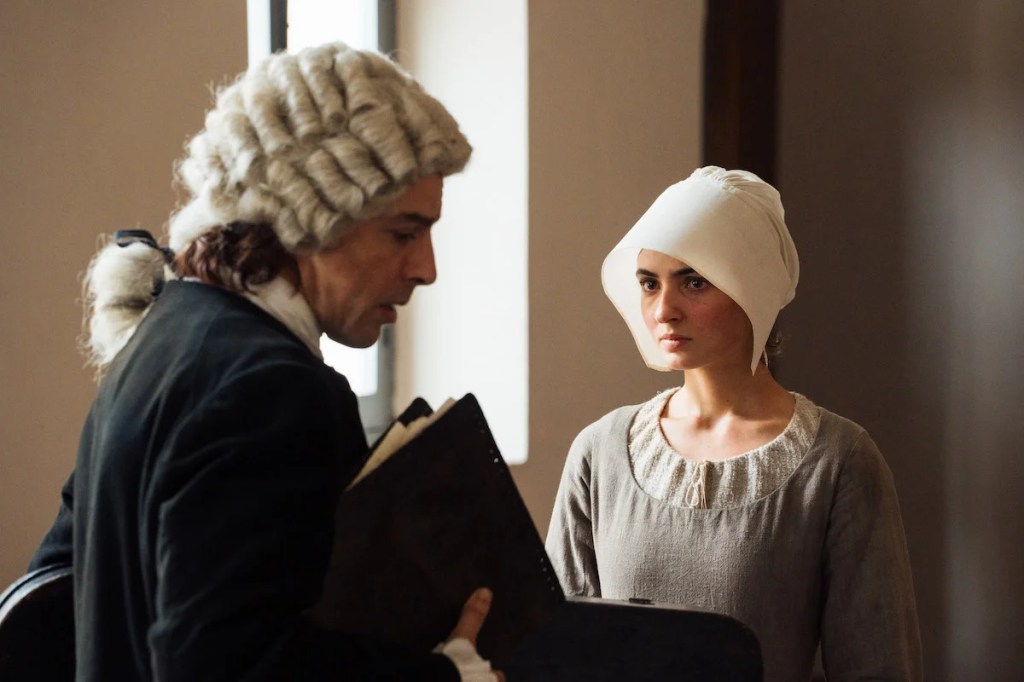
Her name is Cecilia. She is sixteen, maybe seventeen. She lives in the Ospedale della Pietà, the largest girls’ orphanage in eighteenth-century Venice, a Catholic institution that takes in abandoned girls of any age and brands them, upon arrival, with the orphanage’s sigil in hot iron. She is promised in marriage to a general who is currently at war. While she waits, she is taught music and she excel at it. Later on, Vivaldi becomes her teacher. The film is the story of what she does with her love for music and how far she is willing to go to preserve it, before the general comes home.
Now, let me why this is what made me fall for this movie.
The Ospedale della Pietà was a real place, and the marking of orphans with hot iron is not romantic license. The institution housed and educated thousands of girls over centuries. Vivaldi did work there for more than three decades, composing for the orphan musicians who performed for Venetian nobility. The economic engine of this arrangement is what the film shows clearly. But there is something else that most audiences rather not see or be reminded of; especially the targeted audience this movie is attracting… not me, clearly, since I was the only black girl in the theaters and I was also the only woman in my thirties, not above.
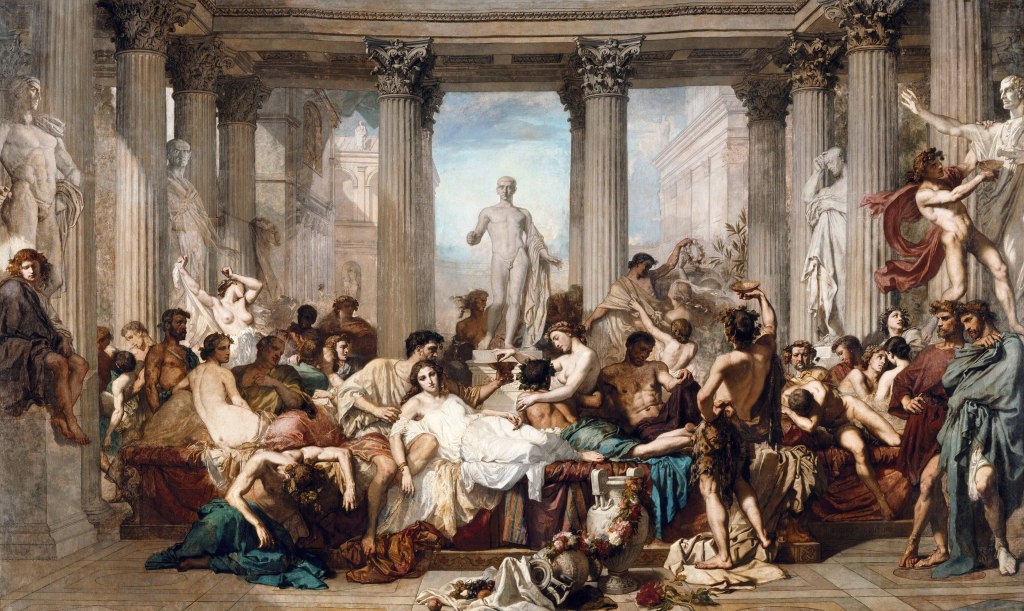
The decadent depicting of an aristocracy gorged on narcissism, luxury, and what I will simply call vulgarity, was paying to consume the art of children who had been abandoned and branded as merchandise. The first hour of the film is full of music. The structure beneath the music is not so harmonious.
But the film’s deepest subject is not the institution. The institution is the soil. The subject is Cecilia.
Cecilia carries the wound of having been abandoned. The film shows her writing letters at night, when the dormitory sleeps. The letters are to her mother. She asks questions she has been asking herself her whole life : why was I left, will you come back, did you leave anything behind for me. The wound is more than metaphorical, it feels like the engine of her interior life.
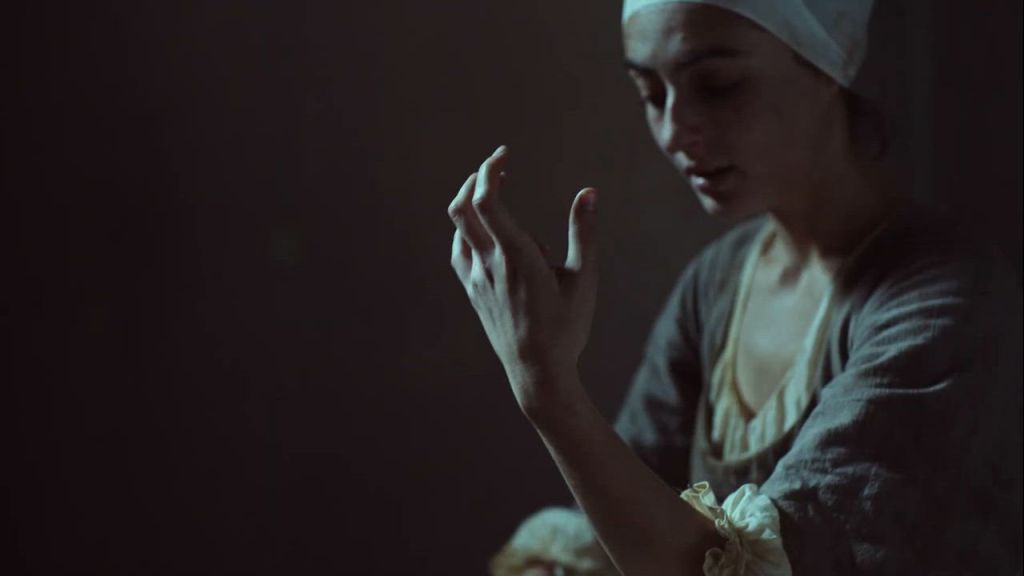
What is masterful, and what I think is the film’s real argument, is the juxtaposition. The orphanage is Catholic. The walls are saturated with the iconography of Mary : the divine mother, the holy mother, the never-selfish mother, the mother who could not abandon. Cecilia walks through that iconography every day. The film does not need to underline it. The contrast does the work. The mother who left her, the mother who would not leave anyone. Cecilia lives in the second’s shadow, the one that literally left her with a mark.
I want to be careful here and highlight that I don’t think this is a film about religion. It is a film about a girl who cannot reconcile the mother she was given to the mother she must give faith to. That faith framework is the air she breathes; it’s not even the question she is asking.
What is the real question, then?
Music.
When Vivaldi hears her play, he hears it. The gift, the control, the discipline that distinguishes her from the other girls. He is not, in the film, a saint either. He is an exhausted, prickly, fully realized man who returns to the orphanage reluctantly because the orphanage needs him and he needs the work. He’s broke and broken. But despite all of that, he hears her. And once he hears her, the film opens for her a possibility she had not let herself consider : that she could stay in this orphenage. That she could refuse the general, refuse the marriage, refuse the future that had been arranged for her body, and remain in the orphanage with the music, with her teacher, indefinitely.
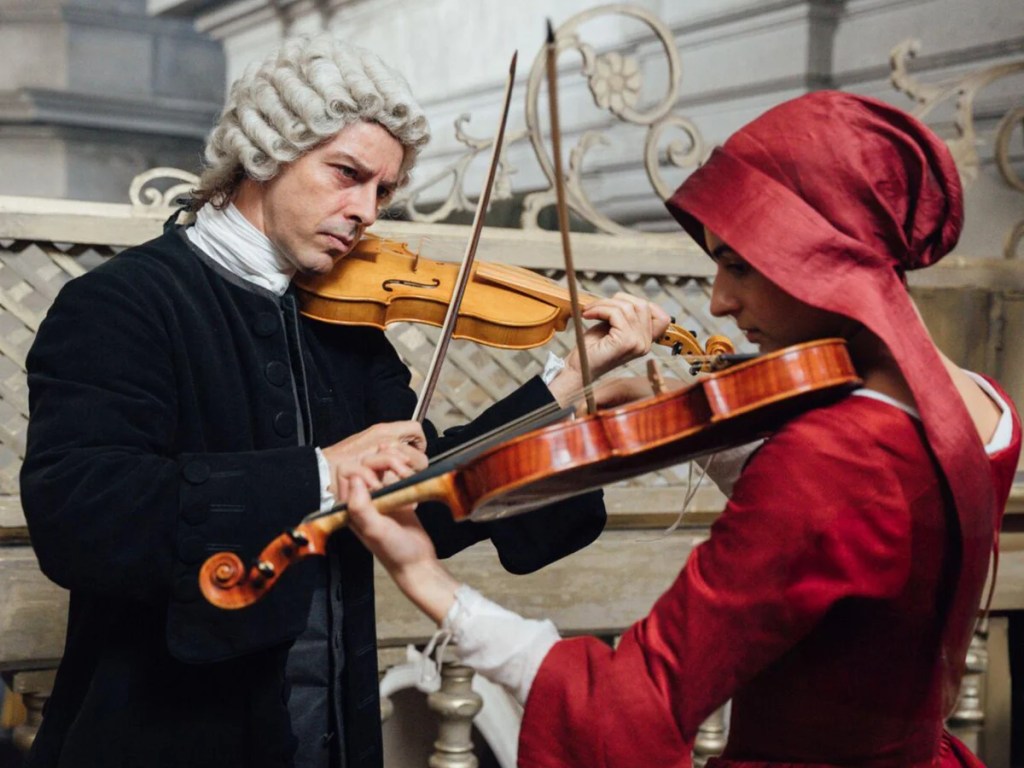
Between an unknown husband and a known violin, there was, as we say in French, pas de photo. The choice was made before the choice was named.
I will not spoil what she does. I truly believe that this film deserves to be watched. What I will say is that Cecilia’s transformation, the decision she takes, the price she is willing to pay for it, are the real material. Vivaldi’s presence is a catalyst, not a center. The film knows this and I was very satisfied that it refuses, again and again, to pivot to him.
Now let me express something about Italian cinema that French cinema almost never gives me.
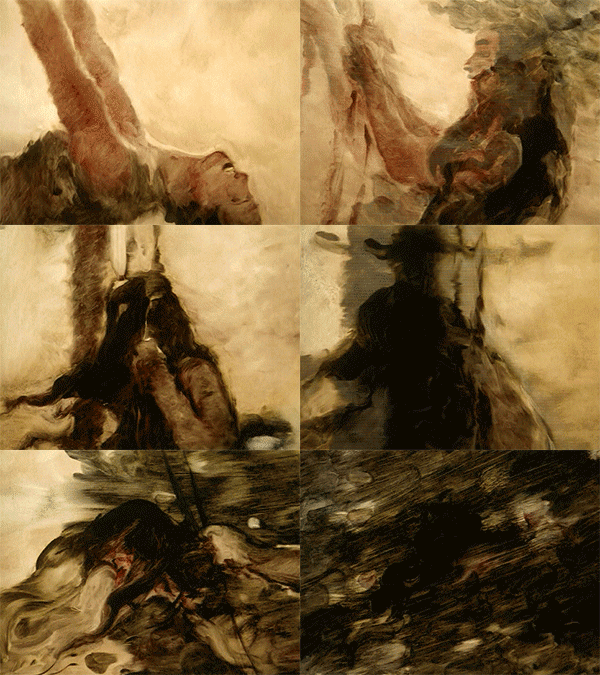
There is an atmosphere in Italian films set in earlier centuries that I have not learned to name precisely. Ethereal. Baroque. Dreamlike. Dark. Primavera’s color palette is not realism ; it is closer to a faded fresco, a candle behind a screen, the underside of a velvet curtain. The result is that I did not feel I was watching a work of art. I felt I was living one, in my flesh. The music played in the film resonated in bones and left me breathless like it did the characters who played it so beautifully in the scenes. The light fell on Cecilia and somehow the light fell on the seat beside me, that is why she is so easy to relate to and to like.
I love Italian cinema for this reason. I love that it does not feel obligated to be sober. I love that it lets atmosphere do half the narrative work. I love that the texture is not afraid of beauty and ugliness.
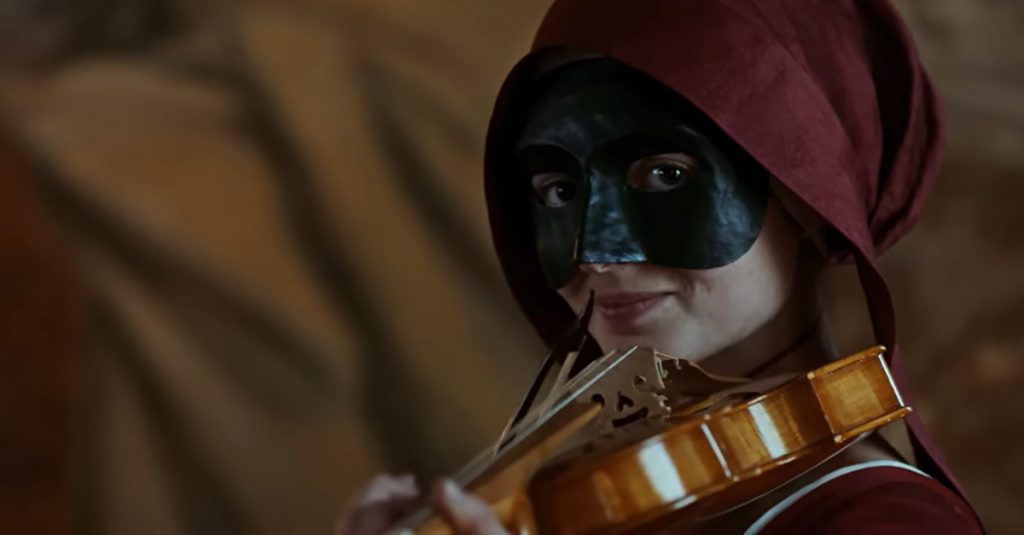
The deepest thing Primavera does is also the simplest: It refuses to make Cecilia an example. It refuses to romanticize her wound. It refuses to turn her music into a metaphor. The film lets the wound be a wound, the music be music, the choice be a choice. And it lets her keep what she chooses, in the only way the eighteenth century lets a girl keep anything : by paying for it with her body, her name, her future.
Music is purpose, and purpose is the only force strong enough to compete with marriage, in this film and in this century. Cecilia knows it. Vivaldi knows it. The film describe it with brio.
I’ve made a Youtube video briefly reviewing the movie if you’re more into this visual format:
Go see Primavera. Tell me in the comments what you think.
**TL;DR**
– Primavera, directed by Damiano Michieletto, is Cecilia’s story, not Vivaldi’s
– The film stages the mother wound in juxtaposition with the iconography of Mary at the Ospedale della Pietà
– Music is purpose, and purpose is the only force strong enough to compete with marriage in the eighteenth century
– Italian cinema gives a texture French cinema almost never offers: ethereal, baroque, unafraid of both beauty and ugliness
– Go see it
Did you like the article? Please leave a comment!
Explore more articles and reviews in the “Digital Wellness & Culture Recommendations : Cultural Reviews” on JGC Blog
To get to know me, the author better, you can subscribe to my Social and Follow the “Sabine Yapping Series” :)
The French translation of this article is available on Substack.




Leave a Reply